


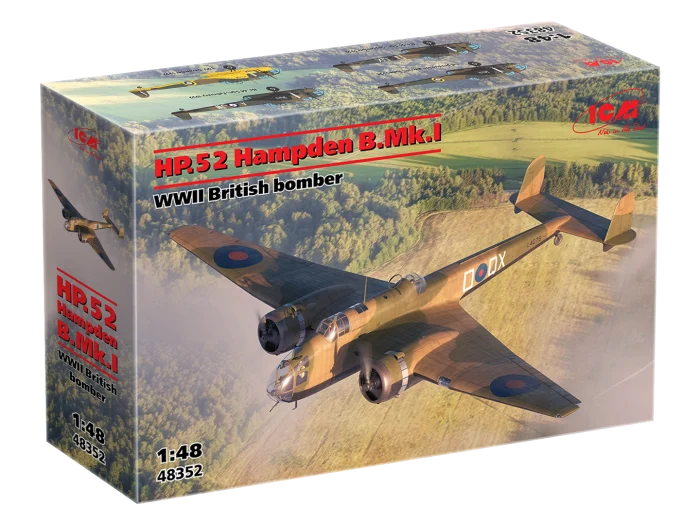
Description
The Handley Page Hampden B Mk.I was a British twin-engine medium bomber used during the early years of World War II.
Designed by Handley Page, it first flew in 1936 and entered service with the Royal Air Force in 1938.
Known as part of the “golden triangle” of RAF bombers alongside the Wellington and Whitley, the Hampden featured a sleek, narrow fuselage and a unique crew configuration, earning it the nickname “Flying Suitcase.”
Powered by two Bristol Pegasus radial engines, the Hampden had a maximum speed of around 254 mph and a range of approximately 1,095 miles.
It could carry a bomb load of up to 4,000 pounds and was armed with a mix of defensive machine guns in dorsal, ventral, and nose positions.
While effective in its early missions, including the first RAF bombing raids over Germany, the Hampden’s limited defensive armament and vulnerability to enemy fighters led to its withdrawal from frontline service by 1942.
It continued in roles such as torpedo bombing and maritime patrol before being retired.
Despite its shortcomings, the Hampden was an important part of the RAF’s bomber force in the war’s critical early stages.